Growth Strategy
Top Digital Marketing Strategies Every Business Should Use in 2026
Discover digital marketing strategies for 2026, from SEO and AI marketing to paid ads, automation, and customer retention.
Brilliant Brains · Oct 17, 2026 · 8 min read
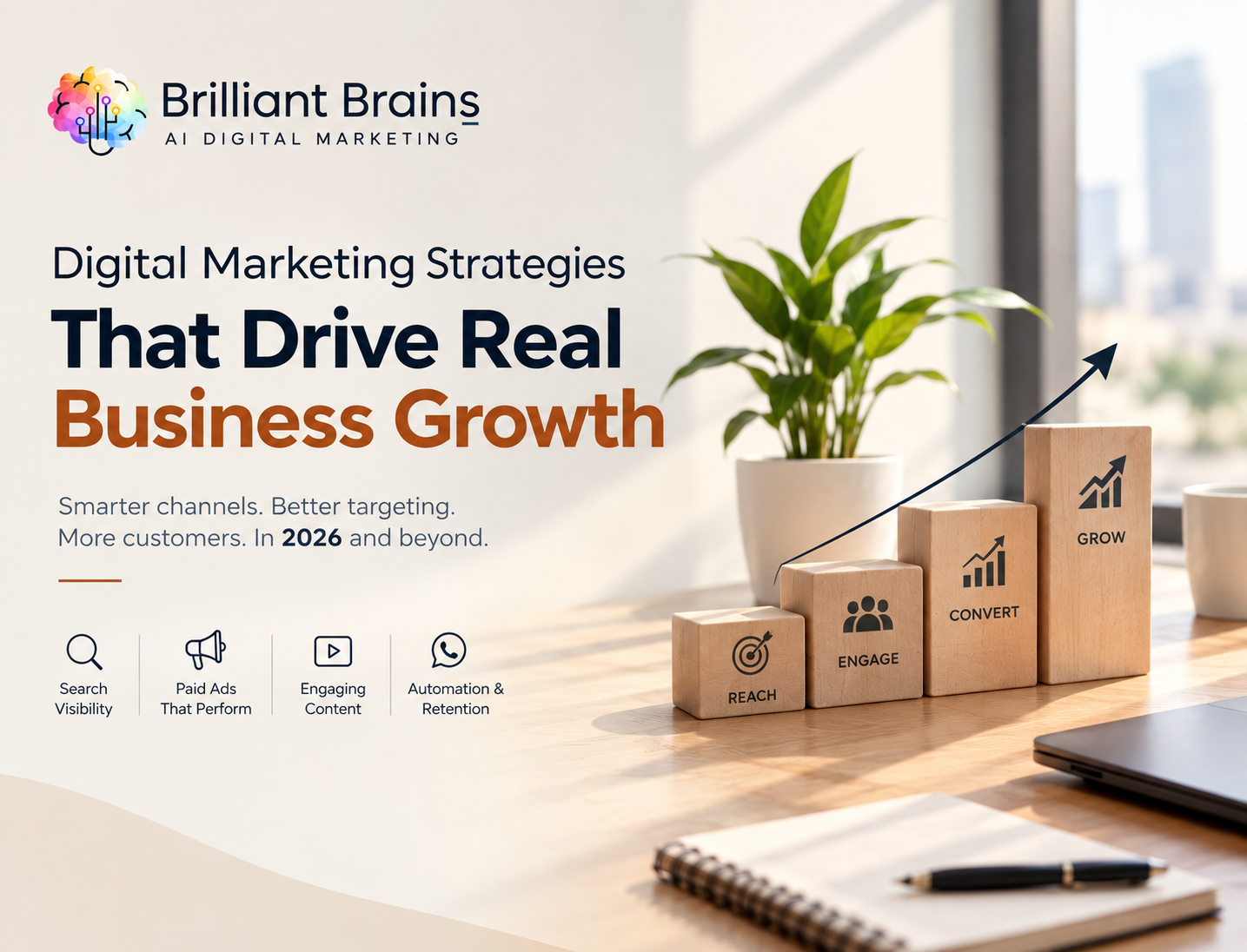
Digital marketing is no longer just about running advertisements or posting on social media. Businesses need to understand customer behaviour, build trust, and create better online experiences to stay competitive in 2026.
From AI-powered search to marketing automation, the right strategies can help businesses reach potential customers, improve conversions, and build lasting relationships. Here are seven practical strategies worth implementing.
1. Optimise for Search Engines and AI Platforms
Customers are discovering businesses through Google, AI-powered search tools, and online recommendations. To remain visible, businesses need useful content that answers customer questions clearly.
Focus on relevant keywords, website structure, page speed, and trustworthy information. Optimising for both traditional search engines and AI-generated answers can improve the chances of your business being discovered.
Businesses can explore SEO, AEO and GEO services to understand how search optimisation supports online visibility.
2. Use Content to Build Customer Trust
Customers often research a product or service before making a decision. Informative blogs, videos, case studies, and customer testimonials can help answer their questions and establish credibility.
Create content around common customer problems instead of promoting your services in every post. A consistent content strategy can attract relevant visitors and help them move closer to a purchase.
3. Make AI Part of Your Marketing Process
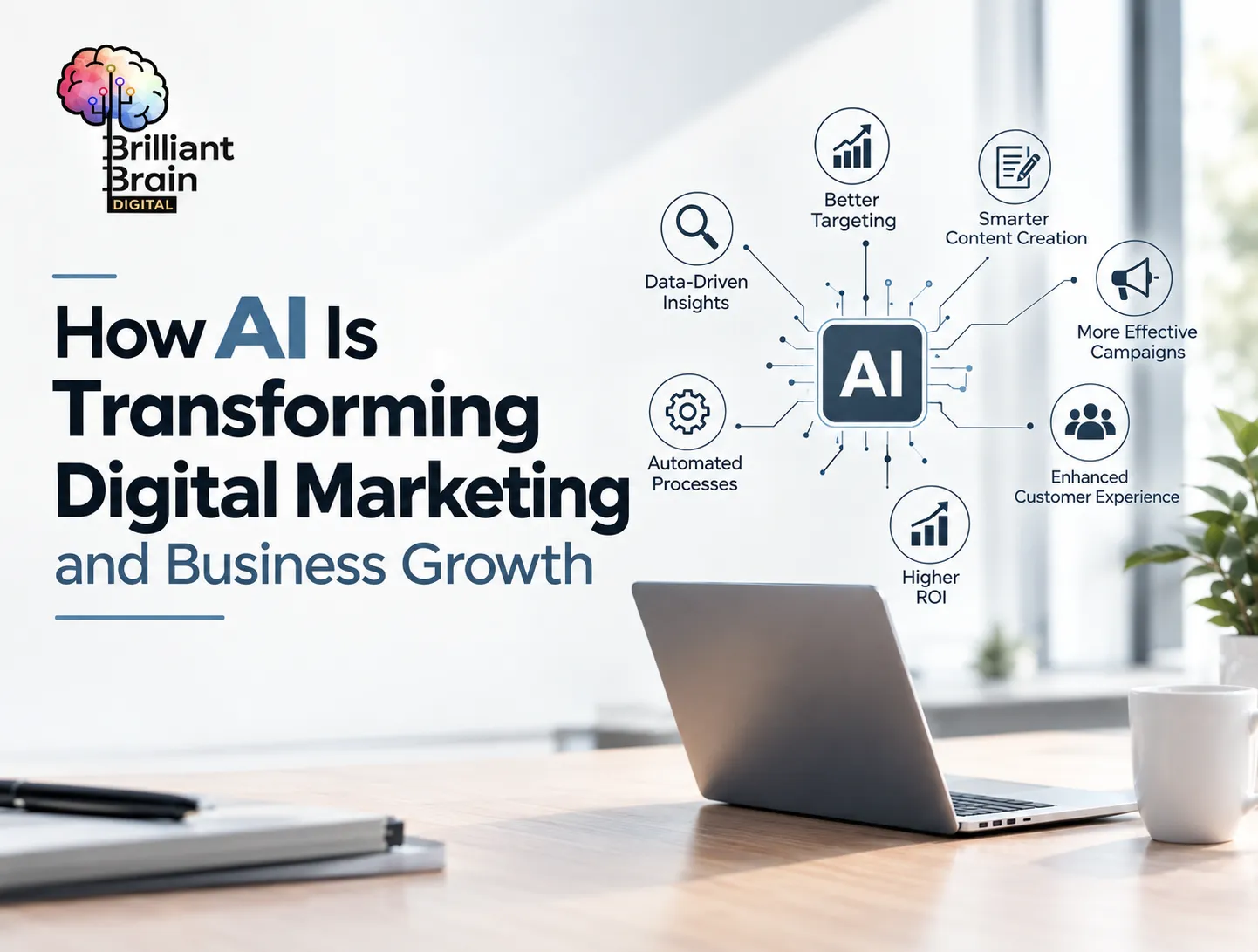
AI can help businesses analyse data, identify customer trends, generate creative ideas, and personalise communication. It can also reduce repetitive tasks, allowing marketing teams to focus on strategy and performance.
However, AI should support human expertise rather than replace it. Always review generated content for accuracy, originality, and relevance.
Businesses can also explore marketing automation services to streamline customer communication and repetitive marketing workflows.
4. Run Data-Driven Advertising Campaigns
Paid advertising on Google, Facebook, Instagram, and LinkedIn can help businesses reach specific audiences and generate enquiries.
Start by defining a clear campaign objective. Test different advertisements, audiences, and landing pages, then use performance data to improve results.
Track qualified leads, conversion rates, and customer acquisition costs instead of focusing only on clicks or impressions. This helps businesses understand whether advertising is contributing to actual growth.
5. Improve Your Website Experience
Your website often creates the first impression of your business. If visitors cannot find information quickly or understand what to do next, they may leave without contacting you.
Make sure your website loads quickly, works well on mobile devices, and provides clear navigation. Include relevant information, visible calls to action, and simple enquiry forms.
Regularly reviewing user behaviour can reveal where visitors lose interest and which pages need improvement.
6. Personalise Communication and Automate Follow-Ups
Generating leads is only one part of marketing. Businesses also need a reliable process for responding to enquiries and nurturing potential customers.
CRM systems, WhatsApp messaging, email campaigns, and automated reminders can help teams respond consistently and manage customer relationships.
For example, a business can automatically acknowledge a new enquiry and notify its sales team to follow up. Personalised communication, with appropriate customer consent, can improve the overall customer experience.
7. Measure Results and Improve Continuously
Digital marketing strategies should evolve based on performance. Review analytics regularly to identify which channels attract valuable visitors, which campaigns generate qualified leads, and where customers drop off.
Set measurable goals and compare results over time. Avoid changing campaigns based on short-term fluctuations alone. Consistent monitoring and testing help businesses make informed decisions and allocate budgets more effectively.
Turn Your Marketing Strategy Into Sustainable Growth
Successful digital marketing requires a combination of visibility, valuable content, effective advertising, and meaningful customer relationships. Businesses that connect these activities and measure their impact are better positioned to adapt to changing customer expectations in 2026.
Brilliant Brains combines AI and human intelligence across search optimisation, performance marketing, creative, automation, and conversion optimisation to help businesses build connected growth strategies.
Frequently Asked Questions
What are the most important digital marketing strategies in 2026?
SEO, AI-powered search visibility, content marketing, paid advertising, website optimisation, automation, and customer retention are key areas to prioritise.
How can small businesses improve online visibility?
Small businesses can publish useful content, optimise their websites, maintain accurate business listings, collect genuine customer reviews, and use targeted advertising.
Can AI replace digital marketers?
No. AI can support research, analysis, content development, and automation, but human judgement remains important for strategy, creativity, and customer understanding.
How can businesses measure digital marketing performance?
Track relevant metrics such as qualified leads, conversion rates, organic traffic, customer acquisition costs, and return on advertising spend.
Why should businesses work with a digital marketing agency?
An experienced agency can help businesses plan campaigns, manage multiple channels, analyse results, and identify opportunities for improvement based on their objectives.